Releases·Tool Release
NVIDIA open-sources TensorRT Model Connect: C++ AI model reference implementations designed for coding agents
An NVIDIA engineering writeup covers lessons from building TensorRT Model Connect, an open source collection of C++ AI model reference implementations on top of TensorRT. The project was designed 'AI native by design' — its architecture and workflow choices were shaped around coding agents rather than human developers.
0 engagement1 sourceTue, Sep 29, 2026, 07:10 PM
AI Overview
- NVIDIA open-sourced TensorRT Model Connect, a collection of C++ AI model reference implementations built on the TensorRT inference stack
- The project was designed around coding agents using parallel work, model-family isolation, reversible changes, and GPU-backed validation
Related
Releases·Tool Release
NVIDIA releases TensorRT Model Connect reference implementations for two-command model deployment
NVIDIA announced TensorRT Model Connect, an open collection of reference implementations for deploying open AI models with TensorRT in native C++ applications. It reduces deployment to two commands from checkpoint to inference, removing model-specific conversion, preprocessing, post-processing, and runtime code. This matters to practitioners shipping open models into native apps without hand-writing integration code.
NVIDIA announced TensorRT Model Connect, an open collection of reference implementations for deploying open AI models with TensorRT in native C++ applications. It reduces deployment to two commands from checkpoint to inference, removing model-specific conversion, preprocessing, post-processing, and runtime code. This matters to practitioners shipping open models into native apps without hand-writing integration code.
0 engagement1 sourcerssFri, Aug 28, 2026, 05:06 PM
Developments·Paper
From PyTorch to the NPU: LLM-Agent-Driven Model Conversion Across Heterogeneous Inference Runtimes
An arXiv paper extends AIPC, an LLM-agent-driven method for automating edge AI model deployment, from Qualcomm AI Runtime to heterogeneous inference backends: Intel OpenVINO, Rockchip RKNN, NVIDIA TensorRT, and ONNX Runtime. The system decomposes deployment into standardized, verifiable stages and injects runtime-specific knowledge via agent skills, scripts, and verification loops. It matters to practitioners because it demonstrates automated single-model-to-single-runtime deployment that previously required substantial manual toolchain work.
An arXiv paper extends AIPC, an LLM-agent-driven method for automating edge AI model deployment, from Qualcomm AI Runtime to heterogeneous inference backends: Intel OpenVINO, Rockchip RKNN, NVIDIA TensorRT, and ONNX Runtime. The system decomposes deployment into standardized, verifiable stages and injects runtime-specific knowledge via agent skills, scripts, and verification loops. It matters to practitioners because it demonstrates automated single-model-to-single-runtime deployment that previously required substantial manual toolchain work.
0 engagement1 sourcearxivWed, Sep 23, 2026, 02:34 AM
News·Company News
Why Telecom Operators Are Building Their AI Strategy on Open Models
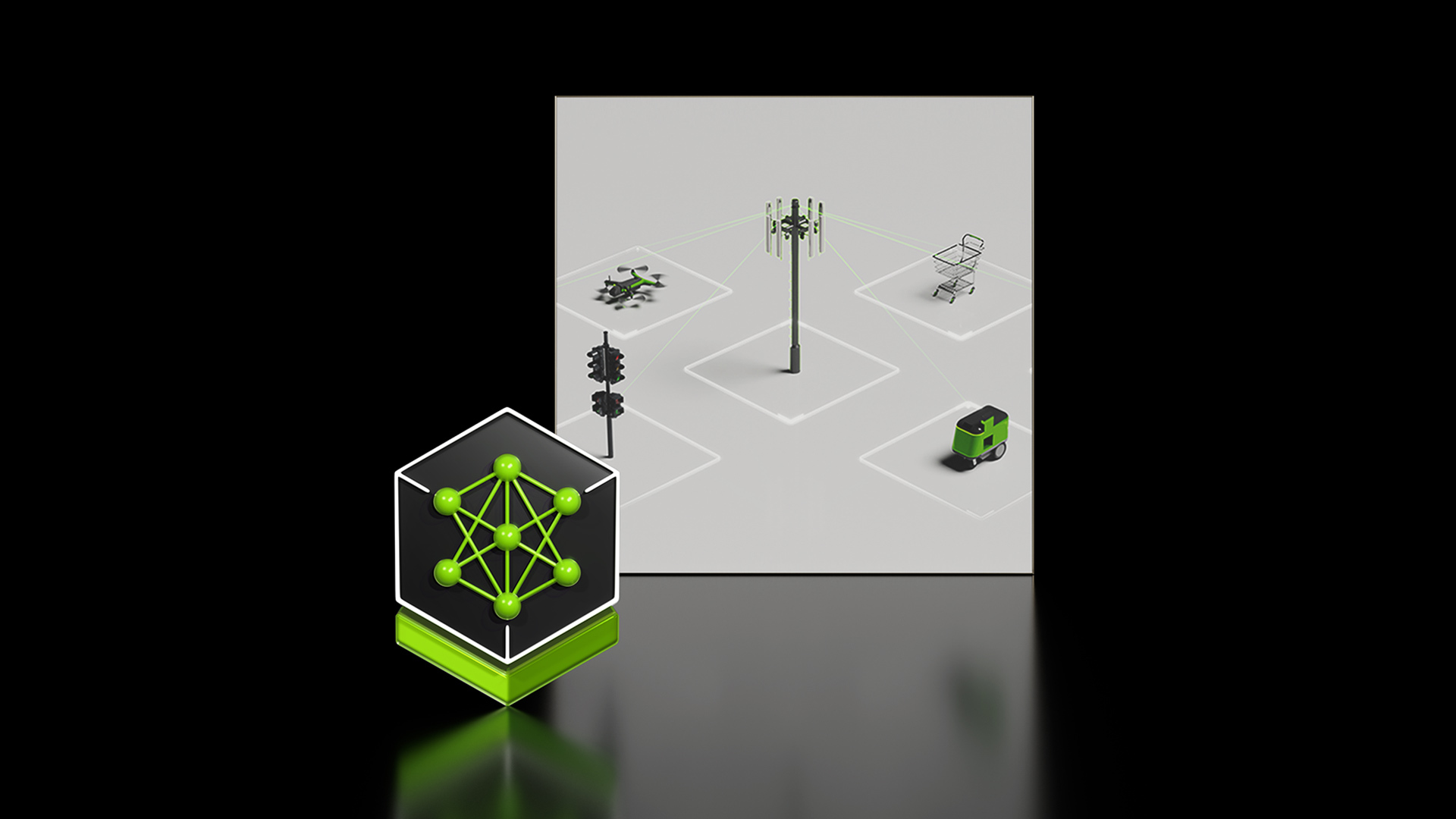
An NVIDIA blog post draws on its State of AI in Telecommunications report, where 89% of respondents said open source models and software are important to their AI strategy. It cites SoftBank's SoftBank Large Telecom Model, AT&T's multi-model approach, and Indosat Ooredoo Hutchison's Sahabat-AI as examples, and highlights the 30-billion-parameter Nemotron 3 Large Telco Model fine-tuned by AdaptKey. For practitioners, the post positions open weights plus NVIDIA's NeMo recipes and AI Enterprise platform as the path to production telecom AI agents.
An NVIDIA blog post draws on its State of AI in Telecommunications report, where 89% of respondents said open source models and software are important to their AI strategy. It cites SoftBank's SoftBank Large Telecom Model, AT&T's multi-model approach, and Indosat Ooredoo Hutchison's Sahabat-AI as examples, and highlights the 30-billion-parameter Nemotron 3 Large Telco Model fine-tuned by AdaptKey. For practitioners, the post positions open weights plus NVIDIA's NeMo recipes and AI Enterprise platform as the path to production telecom AI agents.
0 engagement1 sourcerssTue, Oct 6, 2026, 01:00 PM

Releases·Tool Release
GitHub user giveen releases project-blackbeard, a Blackwell-optimized fork of llama.cpp
A developer named giveen has released project-blackbeard, a fork of llama.cpp specifically optimized for NVIDIA Blackwell GPUs like the RTX 5090. The project aims to maximize inference speed on Blackwell devices and invites community contributions, including from AI agents.
A developer named giveen has released project-blackbeard, a fork of llama.cpp specifically optimized for NVIDIA Blackwell GPUs like the RTX 5090. The project aims to maximize inference speed on Blackwell devices and invites community contributions, including from AI agents.
19 engagement1 sourceredditFri, Jul 17, 2026, 12:34 PM

Releases·Tool Release
NVIDIA releases CUDA MCP server for AI-assisted GPU code and docs
NVIDIA released an NVIDIA-hosted CUDA MCP server that lets AI assistants search official CUDA documentation, write optimized GPU code, and analyze performance data. The tool aims to streamline CUDA development workflows for developers using AI coding assistants.
NVIDIA released an NVIDIA-hosted CUDA MCP server that lets AI assistants search official CUDA documentation, write optimized GPU code, and analyze performance data. The tool aims to streamline CUDA development workflows for developers using AI coding assistants.
83 engagement1 sourceredditThu, Aug 20, 2026, 07:31 PM