Releases·Model Release
NVIDIA launches Cosmos3-H-Dreams, a real-time generative surgical simulator trained on clinical cholecystectomy video
NVIDIA introduced Cosmos3-H-Dreams, an interactive generative surgical simulator trained on clinical cholecystectomy video and robot kinematics from the CMR Surgical Versius platform. It runs in real time on a single RTX PRO 6000 GPU via FlashDreams, supporting live kinematic control of generated surgical scenes. NVIDIA positions it as a research simulator for surgical robotics, not a validated clinical tool.
0 engagement1 sourceTue, Oct 20, 2026, 06:17 PM
AI Overview
- NVIDIA's Cosmos3-H-Dreams builds on Cosmos3-H-Embodied-Nano, a 16-billion-parameter model, trained on CMR Surgical Versius cholecystectomy video and kinematics at 10 Hz
- System runs interactively on a single NVIDIA RTX PRO 6000 GPU via FlashDreams accelerated streaming inference, with an adapted FadeMem module consolidating attention cache
- Training uses 28 action dimensions (pose, gripper, energy controls, thumbstick for two arms) and 832 x 480 video, specialized for Cadiere grasper and monopolar hook
- Distillation pipeline turns a bidirectional teacher into four-step and separately trained two-step causal students, using Self-Forcing to curb error accumulation in rollouts
- NVIDIA claims it is the first real-time generative surgical simulator trained on clinical cholecystectomy recordings to support live kinematic control
- NVIDIA states the simulator is a research tool, not a validated system for patient care; code and checkpoints are on GitHub and Hugging Face
Related
Social·Community
User reports 2 of 5 CMP 170HX GPUs dead in 2 weeks, third with defective tensor cores
A Reddit user running NVIDIA CMP 170HX mining cards reports two of five units failing within two weeks of deployment — one drops off immediately when vLLM starts, another throws CUDA errors on boot. A third arrived with defective tensor cores. The user warns current resale prices don't justify the reliability risk for inference workloads.
A Reddit user running NVIDIA CMP 170HX mining cards reports two of five units failing within two weeks of deployment — one drops off immediately when vLLM starts, another throws CUDA errors on boot. A third arrived with defective tensor cores. The user warns current resale prices don't justify the reliability risk for inference workloads.
279 engagement1 sourceredditWed, Sep 2, 2026, 02:00 AM
Developments·Paper
Surgical WAM: A World-Action Model for Data-Efficient Surgical Robot Learning
A new paper introduces Surgical WAM, a world-action model that leverages abundant endoscopic video to learn surgical scene dynamics, reducing the need for costly action-labeled demonstrations. The approach aims to improve data efficiency for surgical robot learning, addressing a key bottleneck in the field.
A new paper introduces Surgical WAM, a world-action model that leverages abundant endoscopic video to learn surgical scene dynamics, reducing the need for costly action-labeled demonstrations. The approach aims to improve data efficiency for surgical robot learning, addressing a key bottleneck in the field.
0 engagement1 sourcearxivTue, Aug 11, 2026, 05:59 PM
Releases·Tool Release
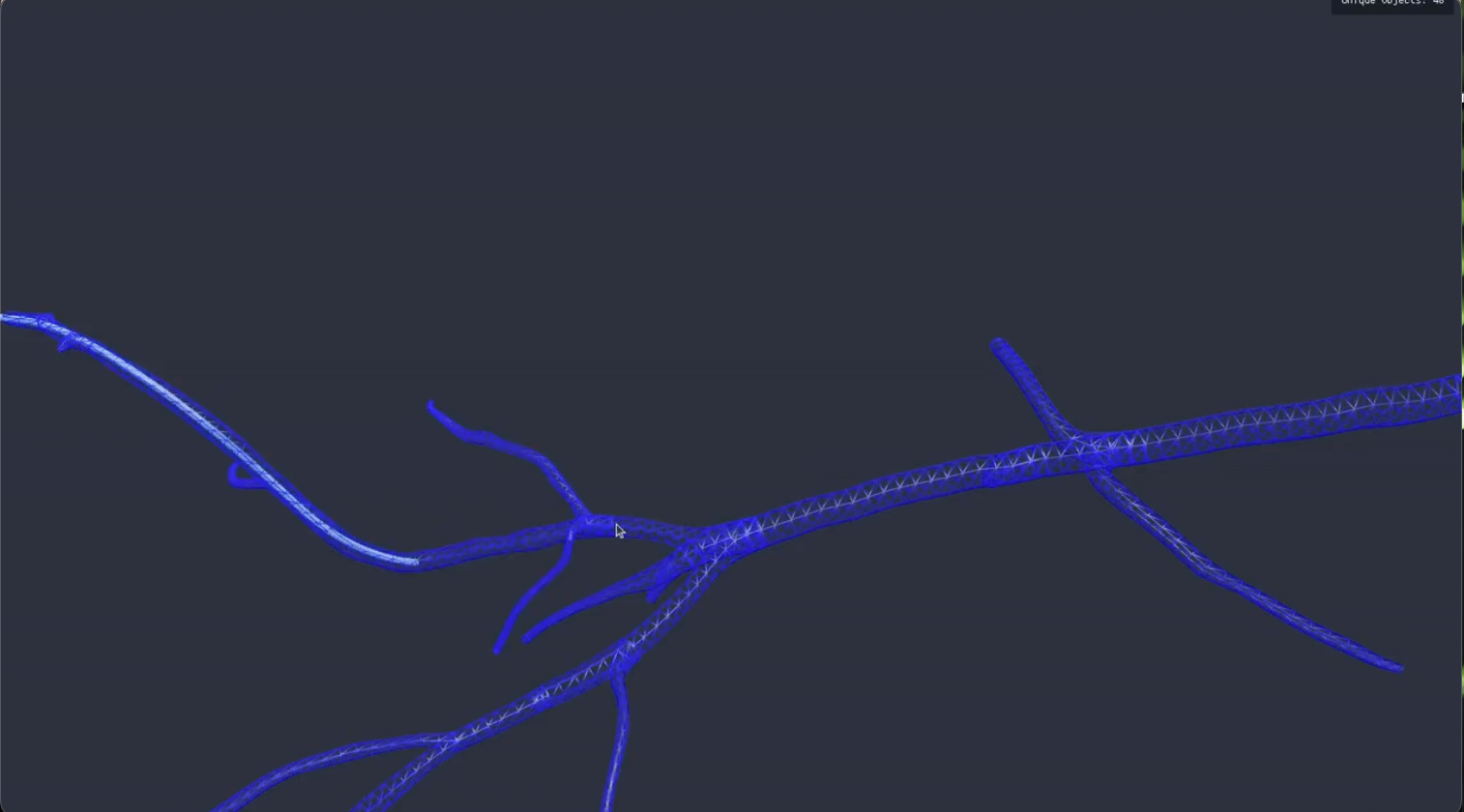
NVIDIA Open Sources First GPU-Accelerated Medical Physics Simulation Framework
NVIDIA has open-sourced a GPU-accelerated medical physics simulation framework within Isaac for Healthcare, designed to generate realistic training data for healthcare robots. The framework addresses the bottleneck of obtaining varied data for training robots to handle anatomical variation, instrument interactions, and edge cases.
NVIDIA has open-sourced a GPU-accelerated medical physics simulation framework within Isaac for Healthcare, designed to generate realistic training data for healthcare robots. The framework addresses the bottleneck of obtaining varied data for training robots to handle anatomical variation, instrument interactions, and edge cases.
0 engagement2 sourcesrssWed, Jul 22, 2026, 01:00 PM
Releases·Tool Release
Sensorium: An Open-Source Multimodal Data Collection and Curation Library for Embodied Surgical AI
A new arXiv paper introduces Sensorium, an open-source Python library for recording, processing, annotating, and curating multimodal surgical data. It runs on ROS and ROS2 middleware and targets embodied surgical AI, where data collection is costly, hard to repeat, and hardware-dependent. Evaluation spans 1516 recordings from phantom, ex vivo, and in vivo porcine experiments.
A new arXiv paper introduces Sensorium, an open-source Python library for recording, processing, annotating, and curating multimodal surgical data. It runs on ROS and ROS2 middleware and targets embodied surgical AI, where data collection is costly, hard to repeat, and hardware-dependent. Evaluation spans 1516 recordings from phantom, ex vivo, and in vivo porcine experiments.
0 engagement1 sourcearxivFri, Oct 30, 2026, 04:04 PM
Developments·Paper
Uranus: Building the Next-Generation Simulation Infrastructure for Embodied AI
A new arXiv paper presents Uranus, a data-driven robot simulator built on a joint-trajectory-conditioned autoregressive diffusion model, aimed at robot data generation, policy training, evaluation, and safe iteration. It streams open-ended rollouts and generates at 24 FPS after inference optimization. Code and model weights are released publicly.
A new arXiv paper presents Uranus, a data-driven robot simulator built on a joint-trajectory-conditioned autoregressive diffusion model, aimed at robot data generation, policy training, evaluation, and safe iteration. It streams open-ended rollouts and generates at 24 FPS after inference optimization. Code and model weights are released publicly.
0 engagement1 sourcearxivMon, Sep 21, 2026, 04:06 PM