Releases·Tool Release
NVIDIA Cosmos Adds Data Factory Blueprints, Framework Agent Skills and Cosmos 3 Updates for World Models
NVIDIA expanded its Cosmos world model platform with new training tools, Cosmos Data Factory blueprints, simulation checkpoints, and Cosmos 3 updates for physical AI developers. The announcement, timed around GTC Berlin, includes adoption examples from Porsche, ANYbotics, Ultralytics, and ADNOC.
0 engagement1 sourceThu, Oct 22, 2026, 05:00 AM
AI Overview
- NVIDIA expanded Cosmos with Data Factory blueprints, Cosmos Framework agent skills and Cosmos 3 Nano simulation variants, ranking top five on six open model leaderboards.
- Cosmos Data Factory ships five cloud-native blueprints via GitHub, Microsoft Azure, Nebius and CoreWeave; Cosmos Curator now handles multimodal multisensory inputs.
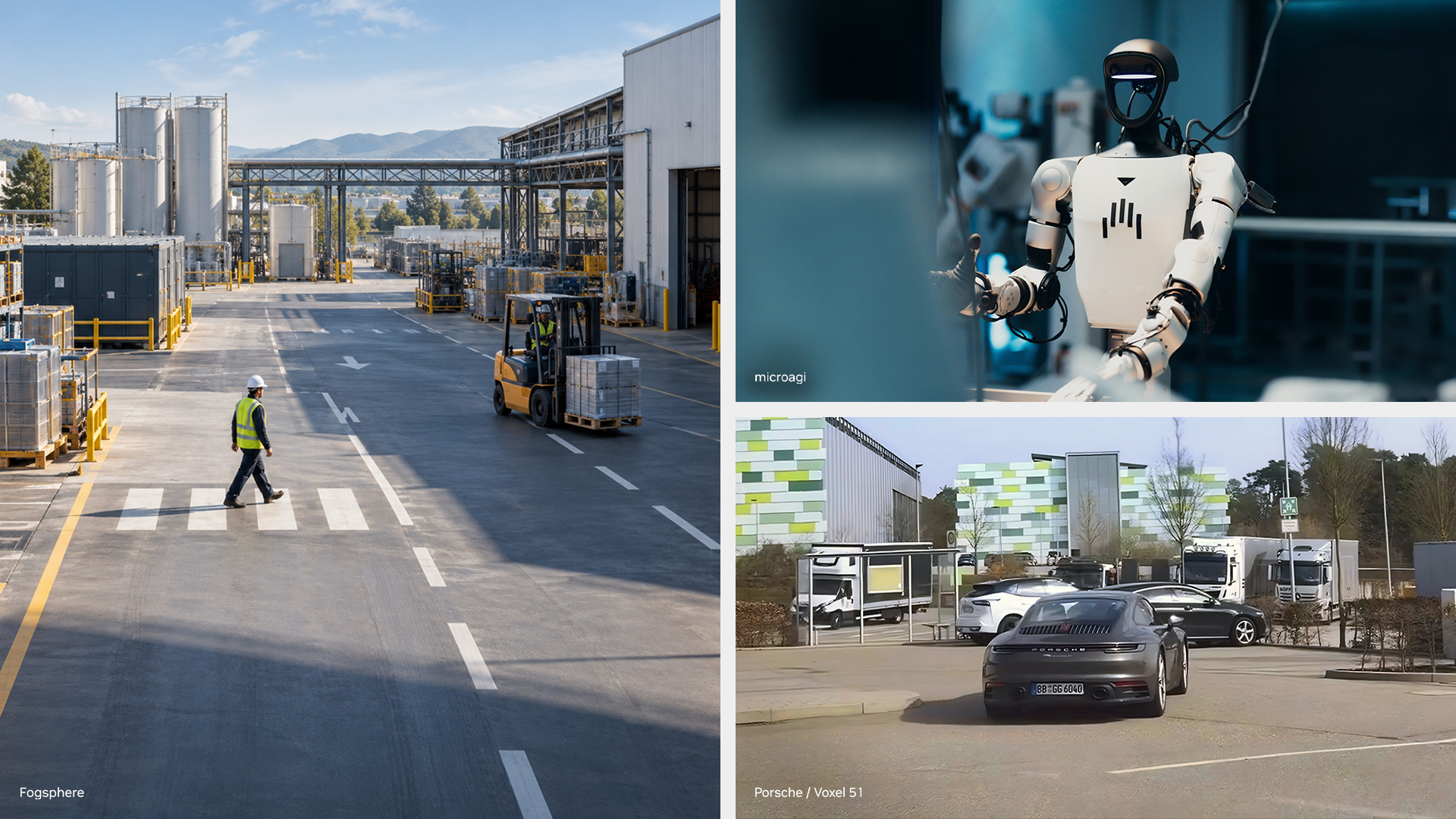
- Porsche uses Cosmos Data Factory via Voxel51 on Azure for a Volkswagen Group AV data flywheel, targeting 90% fewer physical test drives and 85% shorter cycles.
- ANYbotics generated 1,500+ synthetic video clips with Data Factory and Encord to train industrial robots to spot liquid spills; Ultralytics retrained YOLO with synthetic defects.
- Cosmos Framework extends fine-tuning, RL, distillation and quantization agent skills to GR00T, Alpamayo, QWEN, Pi0.5 and compatible Hugging Face models.
- MicroAGI post-trained Cosmos 3 on egocentric manipulation video and distilled its 32-billion-parameter reasoner to an 8-billion-parameter Nano model without accuracy loss.
- New Cosmos 3 NIM microservices deliver up to 2x faster inference; the Metropolis VSS Blueprint 3.3 helps teams monitor 40% more video streams per GPU.
- ADNOC runs Fogsphere's MistIQ platform built on Cosmos and Metropolis VSS to detect safety hazards across 65 sites, using Data Factory for synthetic rare-event training data.
Related
Releases·Model Release
NVIDIA Releases Interactive World Simulation Framework Built on Cosmos World Foundation Models for Physical AI
NVIDIA released four open-weight Cosmos 3 Nano checkpoints for real-time interactive world simulation in Physical AI, alongside a technical report and a shared framework. The models stream camera video and LiDAR observations in response to actions, simulator controls, and text prompts, targeting robotics and autonomous-vehicle training and evaluation. Code, post-training recipes, and checkpoints are available on GitHub and Hugging Face under the OpenMDW1.1 license.
NVIDIA released four open-weight Cosmos 3 Nano checkpoints for real-time interactive world simulation in Physical AI, alongside a technical report and a shared framework. The models stream camera video and LiDAR observations in response to actions, simulator controls, and text prompts, targeting robotics and autonomous-vehicle training and evaluation. Code, post-training recipes, and checkpoints are available on GitHub and Hugging Face under the OpenMDW1.1 license.
0 engagement2 sourcesrss, arxivWed, Nov 4, 2026, 03:11 PM
News·Company News
Mistral and NVIDIA Partner on AI-Native Engineering Workflows, Benchmarks, and Simulation
Mistral and NVIDIA announced a collaboration to build AI-native engineering workflows, combining Mistral Large 4 and Mistral's physics modeling pipelines with NVIDIA CUDA-X, Warp, and Omniverse. The partnership will produce public benchmarks and open datasets for evaluating physics models and agentic AI in CAE and EDA, targeting aerospace, automotive, and semiconductor use cases. It builds on prior joint work including Mistral NeMo and the NVIDIA Nemotron Coalition.
Mistral and NVIDIA announced a collaboration to build AI-native engineering workflows, combining Mistral Large 4 and Mistral's physics modeling pipelines with NVIDIA CUDA-X, Warp, and Omniverse. The partnership will produce public benchmarks and open datasets for evaluating physics models and agentic AI in CAE and EDA, targeting aerospace, automotive, and semiconductor use cases. It builds on prior joint work including Mistral NeMo and the NVIDIA Nemotron Coalition.
2.3k engagement2 sourcesrss, xWed, Oct 21, 2026, 12:00 PM
Releases·Agent Release
NVIDIA Agent Toolkit Expands, Grounding Enterprise Agents in Company Data
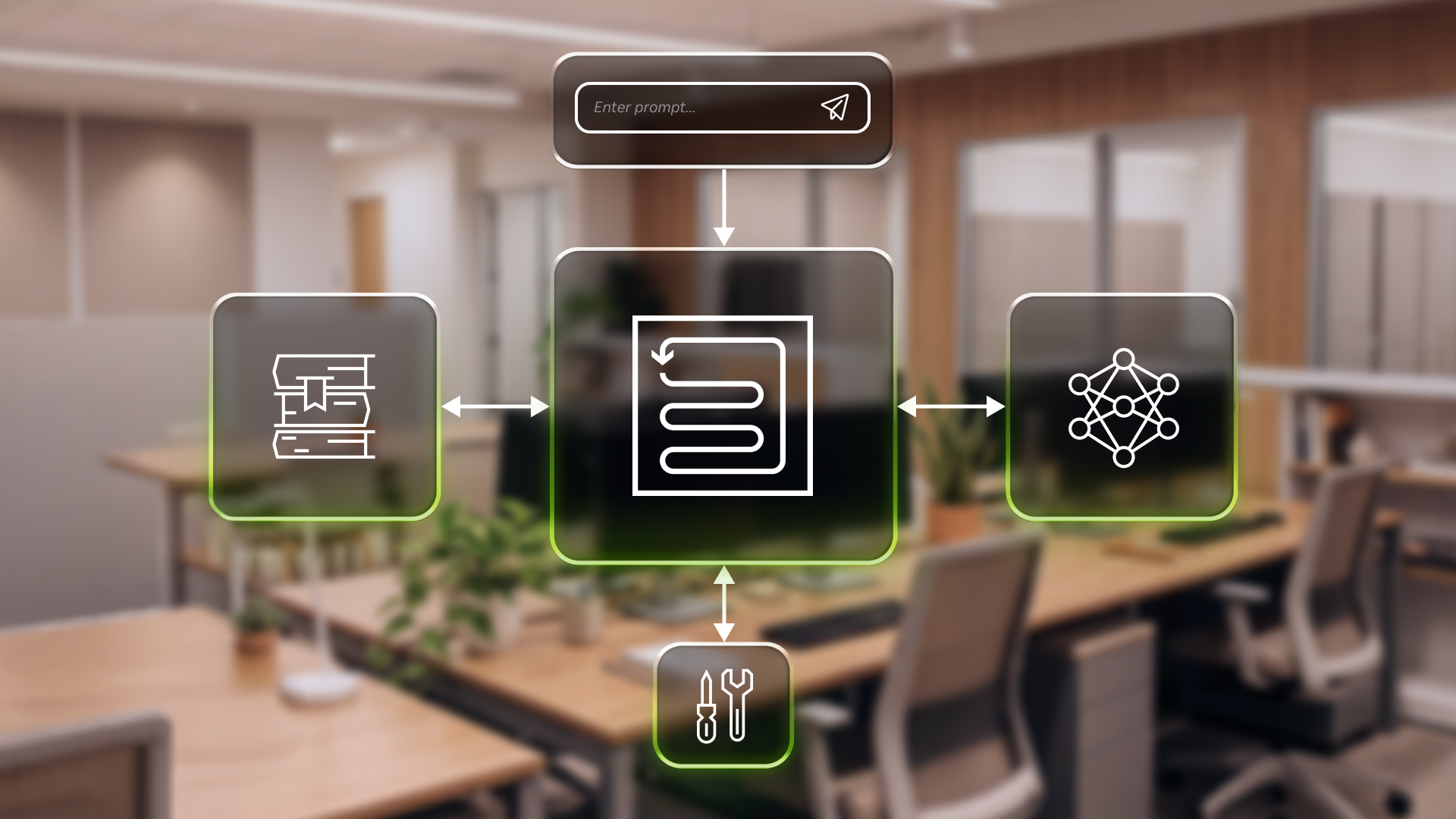
NVIDIA announced an expanded open-source Agent Toolkit centered on the new Agent Knowledge Foundation, which lets enterprises ground agents in proprietary company data without moving it or changing governance. The stack includes a secure runtime (OpenShell), reference blueprints (NemoClaw), and Nemotron Retriever and Kumo open models. Adopters include Palantir, Databricks, Snowflake, SAP, ServiceNow, and Zoom.
NVIDIA announced an expanded open-source Agent Toolkit centered on the new Agent Knowledge Foundation, which lets enterprises ground agents in proprietary company data without moving it or changing governance. The stack includes a secure runtime (OpenShell), reference blueprints (NemoClaw), and Nemotron Retriever and Kumo open models. Adopters include Palantir, Databricks, Snowflake, SAP, ServiceNow, and Zoom.
0 engagement1 sourcerssWed, Oct 21, 2026, 10:10 AM
Developments·Paper
Industrial ReMEmbR: Scaling Spatiotemporal Memory to Robot Fleets
An arXiv paper presents Industrial ReMEmbR, extending NVIDIA's ReMEmbR from single robots to fleets. The system builds a shared spatiotemporal memory for warehouse robots, generating scene descriptions only on demand to cut server-side computation. Robots encode video locally on Jetson hardware without uploading raw camera frames, and the design includes PII zeroing for GDPR-compliant deployments.
An arXiv paper presents Industrial ReMEmbR, extending NVIDIA's ReMEmbR from single robots to fleets. The system builds a shared spatiotemporal memory for warehouse robots, generating scene descriptions only on demand to cut server-side computation. Robots encode video locally on Jetson hardware without uploading raw camera frames, and the design includes PII zeroing for GDPR-compliant deployments.
0 engagement1 sourcearxivTue, Oct 20, 2026, 05:58 PM
Releases·Tool Release
NVIDIA Open-Sources Full Run:ai Platform as Part of DSX AI Factory Platform
NVIDIA released the full Run:ai platform as open source software, giving customers, developers, and ecosystem partners access to its production-grade AI workload and GPU orchestration capabilities. The move expands the NVIDIA DSX AI Factory Platform and positions Run:ai as an open foundation for ecosystem-built orchestration solutions. For practitioners, it means the GPU scheduling and workload tooling behind NVIDIA's AI factory stack can now be inspected, extended, and deployed independently.
NVIDIA released the full Run:ai platform as open source software, giving customers, developers, and ecosystem partners access to its production-grade AI workload and GPU orchestration capabilities. The move expands the NVIDIA DSX AI Factory Platform and positions Run:ai as an open foundation for ecosystem-built orchestration solutions. For practitioners, it means the GPU scheduling and workload tooling behind NVIDIA's AI factory stack can now be inspected, extended, and deployed independently.
0 engagement1 sourcerssTue, Oct 13, 2026, 02:19 PM