
Releases·Tool Releasefeatured
Google DeepMind announces SynthID Bio to watermark and detect AI-designed proteins
Google DeepMind announced SynthID Bio, a family of watermarking methods that embed an imperceptible signature directly into AI-designed protein sequences without affecting their biological function. The signature remains checkable after physical synthesis, aiming at biosecurity (helping DNA manufacturers screen orders) and scientific integrity (distinguishing AI-generated designs from experimental data). The work is described in a Nature technical paper, and DeepMind says it is releasing the tools openly for research use.
1280 engagement3 sourcesWed, Sep 30, 2026, 03:48 PM
Developments
DeepMind is releasing SynthID Bio tools on an open basis for research use, per its October 1 posts.
Thu, Oct 1, 2026, 11:43 AM
AI Overview
- SynthID Bio embeds a detectable signature in AI-designed proteins that persists after physical synthesis, detailed in a Nature paper
- Goals include biosecurity—helping DNA manufacturers flag untrusted designs—and separating AI-generated structures from experimentally measured ones
- Lab tests showed watermarked proteins performed as well as unwatermarked versions; removal resistance and safety guarantees remain open challenges
- DeepMind calls SynthID Bio a world first: an imperceptible signature embedded directly into protein sequences without affecting biological function
- DeepMind is releasing the SynthID Bio detection tools openly for research use
Related
Developments·Paper
Protein watermark acts as a digital ID card to help DNA labs verify synthetic proteins and keep sequence databases accurate
A watermark acting like a digital ID card lets DNA labs verify whether synthetic protein designs originate from AI systems. The approach aims to keep sequence databases accurate and help labs automate biosecurity checks as AI-generated protein designs scale.
A watermark acting like a digital ID card lets DNA labs verify whether synthetic protein designs originate from AI systems. The approach aims to keep sequence databases accurate and help labs automate biosecurity checks as AI-generated protein designs scale.
97 engagement1 sourcexThu, Oct 1, 2026, 11:43 AM
Developments·Paper
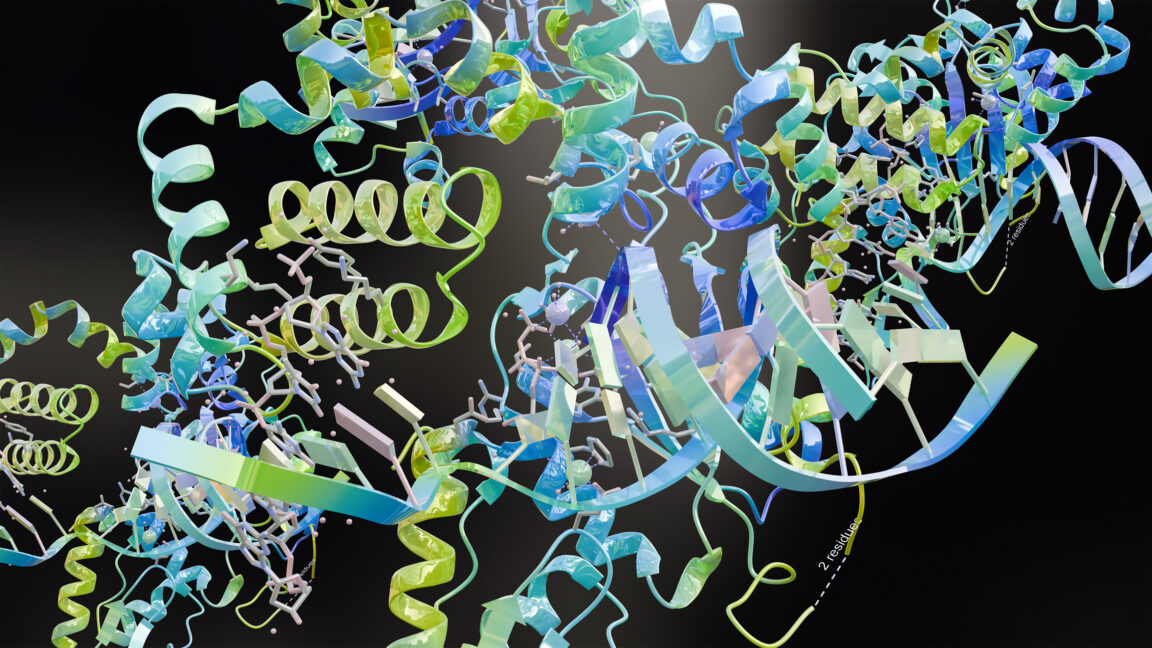
Google figures out how to watermark AI-designed proteins
Google reports a method for watermarking AI-designed proteins, addressing a biosecurity gap flagged nearly a year earlier: DNA-screening software cannot identify AI-designed proteins that might encode toxins or alter viral behavior. A reliable watermark would let screening tools flag such sequences before synthesis.
Google reports a method for watermarking AI-designed proteins, addressing a biosecurity gap flagged nearly a year earlier: DNA-screening software cannot identify AI-designed proteins that might encode toxins or alter viral behavior. A reliable watermark would let screening tools flag such sequences before synthesis.
0 engagement1 sourcerssWed, Sep 30, 2026, 03:54 PM
Social·Community
Why AlphaFold Didn't Solve Protein Folding — Pushmeet Kohli, Google DeepMind & Sal Candido, Biohub
Google DeepMind's Pushmeet Kohli and Biohub's Sal Candido joined a panel, moderated by Brandon Anderson, on AI-driven biology. They argued AlphaFold did not solve protein folding, that scaling compute and data alone will not solve biology, and that the right scaling law and problem-first thinking matter more than model size. The discussion frames what it would take to build predictive models of living systems, from virtual cells to 10x drug-discovery acceleration.
Google DeepMind's Pushmeet Kohli and Biohub's Sal Candido joined a panel, moderated by Brandon Anderson, on AI-driven biology. They argued AlphaFold did not solve protein folding, that scaling compute and data alone will not solve biology, and that the right scaling law and problem-first thinking matter more than model size. The discussion frames what it would take to build predictive models of living systems, from virtual cells to 10x drug-discovery acceleration.
0 engagement1 sourcerssSat, Oct 10, 2026, 12:31 AM
Developments·Paper
MARCO: The Radioactive Watermark for Protein Generative Models
An arXiv paper introduces MARCO, the first watermarking framework designed for protein generative models. It embeds watermarks during diffusion reverse denoising without freezing-breaking changes, protecting IP and enabling forensic traceability of biosecurity misuse. Its 'radioactive' property transfers the watermark to pirate models trained on watermarked outputs.
An arXiv paper introduces MARCO, the first watermarking framework designed for protein generative models. It embeds watermarks during diffusion reverse denoising without freezing-breaking changes, protecting IP and enabling forensic traceability of biosecurity misuse. Its 'radioactive' property transfers the watermark to pirate models trained on watermarked outputs.
0 engagement1 sourcearxivTue, Oct 6, 2026, 01:18 PM
Releases·Tool Release
Google’s SynthID embeds digital watermark during AI generation
Google’s SynthID takes a novel approach to AI content detection by embedding a digital watermark directly into generated content during creation, rather than analyzing it after the fact. This shift from post-hoc detection to proactive identification changes the architecture of AI content provenance.
Google’s SynthID takes a novel approach to AI content detection by embedding a digital watermark directly into generated content during creation, rather than analyzing it after the fact. This shift from post-hoc detection to proactive identification changes the architecture of AI content provenance.
0 engagement1 sourcerssSat, Jul 11, 2026, 01:31 PM