Releases·Tool Release
Children's Hospital of Philadelphia Uses Open Source NVIDIA AI to Model Kids' Hearts in Seconds for Cardiac Care
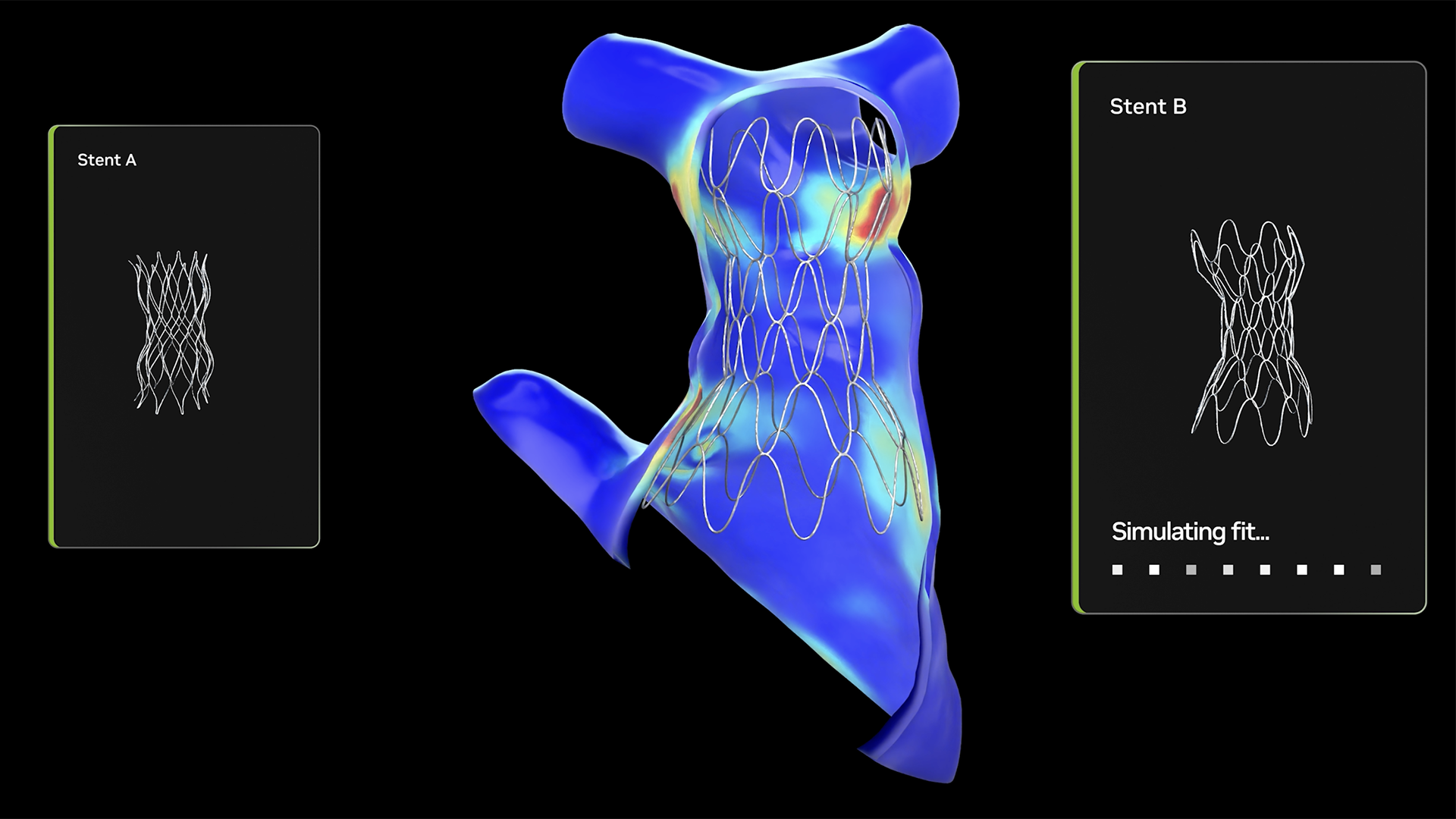
Children's Hospital of Philadelphia builds anatomically precise pediatric heart models in seconds using MONAI Label and NVIDIA Auto3DSeg, cutting a four-hour manual workflow to routine clinical use. CHOP is now integrating NVIDIA's Warp and Newton physics engines to simulate how cardiac devices deploy in a child's anatomy before surgery, aiming for near real-time, same-day clinical decisions. The approach is spreading to 20+ U.S. children's hospitals, with a national consortium forming around shared open source modeling infrastructure.
0 engagement1 sourceTue, Sep 15, 2026, 09:00 AM
AI Overview
- CHOP's cardiac modeling service, built on the NVIDIA-cofounded open source MONAI framework, turns existing CT, MRI and 3D ultrasound scans into precise heart models in seconds, down from four hours
- More than 20 U.S. children's hospitals run cardiac modeling programs; Boston Children's models over half of cardiac surgeries (~500 cases/year) and CHOP expects ~200 this year
- Jolley's team built the open source SlicerHeart 3D Slicer extension and trained segmentation networks with MONAI Label and NVIDIA Auto3DSeg, matching human quality in seconds
- CHOP now routinely models complex ventricular septal defects before surgery; after two failed repairs, a 3D model enabled success on the first attempt
- CHOP is working with NVIDIA on the open source Newton physics engine and Warp framework to simulate cardiac device deployment near real time, informing same-day decisions
- A SlicerHeart and NVIDIA Omniverse digital twin coupler using OpenUSD is in development, enabling VR environments with vision-language models for querying cardiac anatomy
- A national children's hospital consortium is forming around shared open source modeling infrastructure, with Stanford and Boston Children's contributing tools
- About 2.4 million U.S. congenital heart disease patients are too small a market for device-company investment, so open source is the workaround
Related
Releases·Tool Release
NVIDIA Open Sources First GPU-Accelerated Medical Physics Simulation Framework
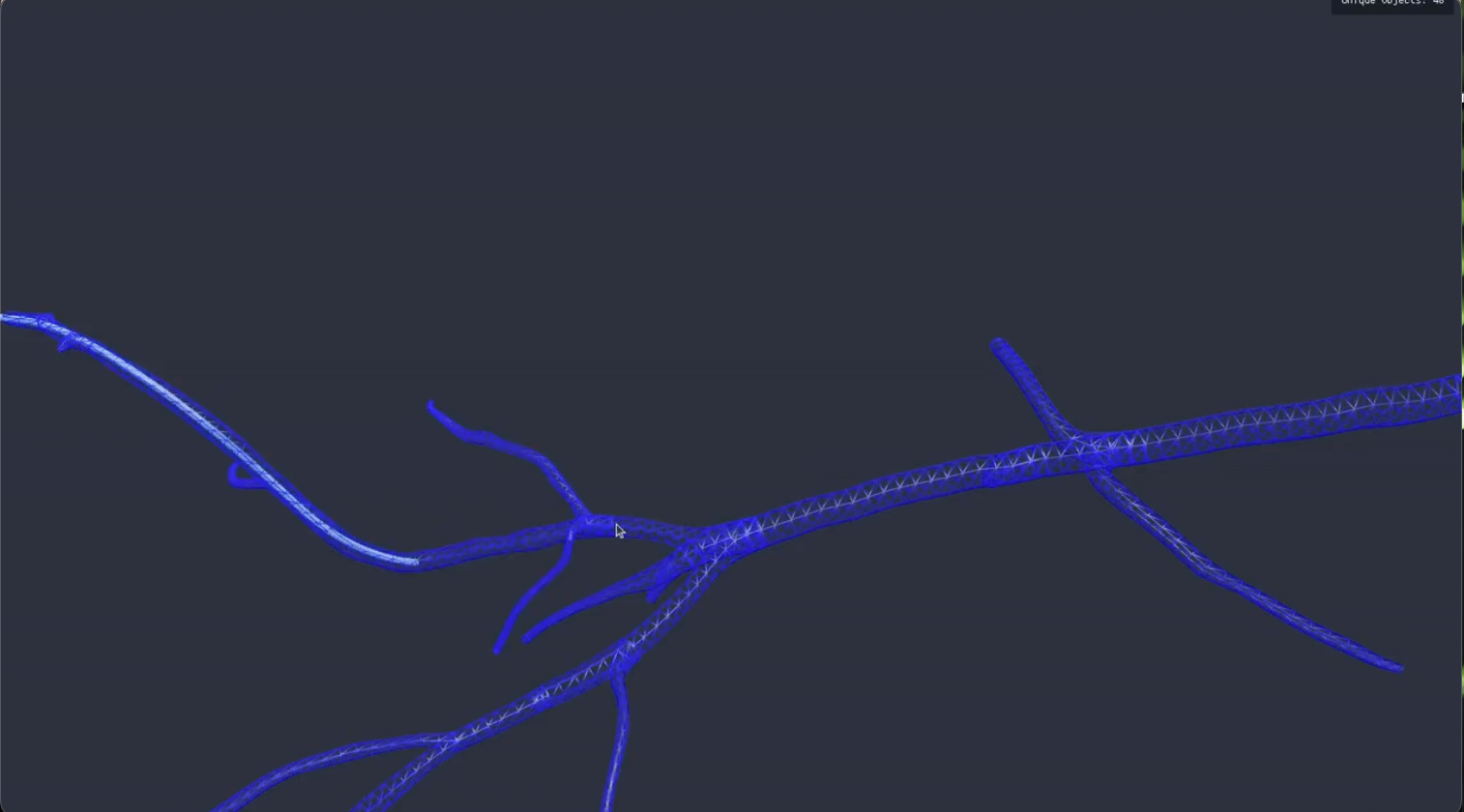
NVIDIA has open-sourced a GPU-accelerated medical physics simulation framework within Isaac for Healthcare, designed to generate realistic training data for healthcare robots. The framework addresses the bottleneck of obtaining varied data for training robots to handle anatomical variation, instrument interactions, and edge cases.
NVIDIA has open-sourced a GPU-accelerated medical physics simulation framework within Isaac for Healthcare, designed to generate realistic training data for healthcare robots. The framework addresses the bottleneck of obtaining varied data for training robots to handle anatomical variation, instrument interactions, and edge cases.
0 engagement2 sourcesrssWed, Jul 22, 2026, 01:00 PM
Releases·Tool Release
NVIDIA details scaling MuJoCo robotics simulation to 2,048 parallel GPU environments with Warp and MJWarp
An NVIDIA developer article explains how to migrate a MuJoCo robotics scene — an SO-101 arm doing a pick-and-place task — onto MuJoCo Warp (MJWarp), which runs MuJoCo physics as CUDA kernels on NVIDIA GPUs. It covers the Warp kernel model, batched simulation of up to 2,048 parallel environments, and validation steps for matching CPU and GPU backends. Practitioners gain a concrete recipe for boosting aggregate simulation throughput for reinforcement learning and large-scale sampling.
An NVIDIA developer article explains how to migrate a MuJoCo robotics scene — an SO-101 arm doing a pick-and-place task — onto MuJoCo Warp (MJWarp), which runs MuJoCo physics as CUDA kernels on NVIDIA GPUs. It covers the Warp kernel model, batched simulation of up to 2,048 parallel environments, and validation steps for matching CPU and GPU backends. Practitioners gain a concrete recipe for boosting aggregate simulation throughput for reinforcement learning and large-scale sampling.
0 engagement1 sourcerssWed, Sep 23, 2026, 06:41 PM
Developments·Paper
MIT's xvr AI aligns surgical X-rays with 3D scans in seconds, outperforming existing methods by 10x (Nature)
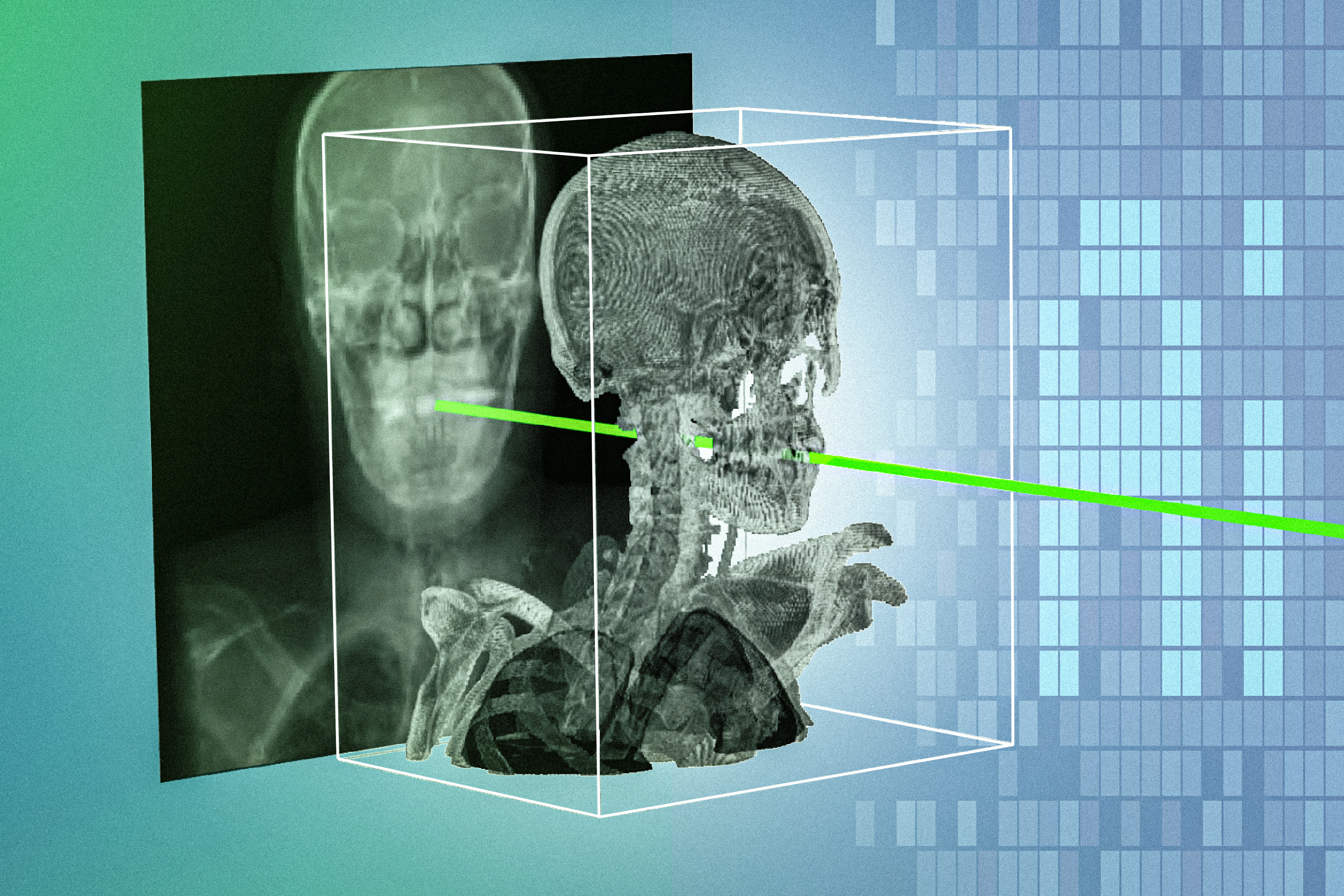
Researchers at MIT and collaborating hospitals developed xvr, an AI system that registers real-time surgical X-rays with preoperative 3D scans (CT/MRI) in seconds with sub-millimeter precision, adapting to each patient in about five minutes. Published in Nature, it outperformed existing AI registration methods by an order of magnitude and could make minimally invasive procedures like stroke interventions more accessible.
Researchers at MIT and collaborating hospitals developed xvr, an AI system that registers real-time surgical X-rays with preoperative 3D scans (CT/MRI) in seconds with sub-millimeter precision, adapting to each patient in about five minutes. Published in Nature, it outperformed existing AI registration methods by an order of magnitude and could make minimally invasive procedures like stroke interventions more accessible.
0 engagement1 sourcerssWed, Sep 16, 2026, 03:00 PM
Developments·Paper
VIDS-Seg applies variational inference to quantify uncertainty in pediatric cardiac ultrasound segmentation
Researchers introduced VIDS-Seg, an extension of the VIDS framework for uncertainty quantification in pediatric cardiac ultrasound segmentation. It addresses silent model failures on underrepresented subgroups like children when models are trained on adult data, without requiring labeled pediatric data for retraining.
Researchers introduced VIDS-Seg, an extension of the VIDS framework for uncertainty quantification in pediatric cardiac ultrasound segmentation. It addresses silent model failures on underrepresented subgroups like children when models are trained on adult data, without requiring labeled pediatric data for retraining.
0 engagement1 sourcearxivTue, Aug 11, 2026, 01:27 PM
Releases·Tool Release
OsteoCAD framework brings cloud-edge deep learning to bone tumor segmentation
Researchers introduced OsteoCAD, a modular eHealth framework that provides end-to-end deep learning capabilities for bone tumor segmentation, from dataset creation to inference, via a user-friendly interface. It addresses limited computational resources and expertise in healthcare by securely connecting to cloud-edge resources, enabling human-in-the-loop workflows.
Researchers introduced OsteoCAD, a modular eHealth framework that provides end-to-end deep learning capabilities for bone tumor segmentation, from dataset creation to inference, via a user-friendly interface. It addresses limited computational resources and expertise in healthcare by securely connecting to cloud-edge resources, enabling human-in-the-loop workflows.
0 engagement1 sourcearxivFri, Jul 31, 2026, 10:38 AM