Releases·Hardware Release
Apple's Minions: A virtual GPU cloud built from idle Apple Silicon Macs
Apple describes Minions, a virtual GPU cloud built from idle Apple Silicon Macs
343 engagement1 sourceTue, Oct 13, 2026, 12:26 PM
AI Overview
- Apple describes Minions, a system aggregating idle Apple Silicon Macs into a virtual GPU cloud, on its ML research site
- The project targets turning underutilized consumer Apple Silicon machines into distributed GPU compute
- The writeup drew 136 points on Hacker News on 2026-10-13
Entities
Related
Developments·Hardware
Minions: A Dynamic and Distributed Virtual GPU Cloud Built on Idle Apple Silicon Devices
An arXiv paper presents Minions, a system that aggregates idle Apple Silicon GPUs across macOS devices into a distributed virtual GPU cloud for ML inference. It offers fault tolerance and flexible task execution, letting teams run inference without buying dedicated GPUs. The work matters to practitioners facing high cost, limited elasticity, or wait times on centralized GPU infrastructure.
An arXiv paper presents Minions, a system that aggregates idle Apple Silicon GPUs across macOS devices into a distributed virtual GPU cloud for ML inference. It offers fault tolerance and flexible task execution, letting teams run inference without buying dedicated GPUs. The work matters to practitioners facing high cost, limited elasticity, or wait times on centralized GPU infrastructure.
0 engagement1 sourcearxivFri, Oct 9, 2026, 04:11 AM
Products·building
TezGrid – AI inference on idle computers and Macs
TezGrid is an experiment in running AI inference across idle computers and Macs, pooling spare compute. LLMs run distributed on underused machines. It targets users who want cheap or free inference capacity without dedicated hardware.
TezGrid is an experiment in running AI inference across idle computers and Macs, pooling spare compute. LLMs run distributed on underused machines. It targets users who want cheap or free inference capacity without dedicated hardware.
1 engagement1 sourcehackernewsSat, Oct 17, 2026, 05:50 PM

Products·launched
Seahaven: open source framework for building RL environments for LLM agents
Seahaven is an open source framework for building RL/eval environments for optimizing long-running LLM agents. It provides realistic data, stateful writes, and resettable starting points so agent iterations (prompts, tools, subagents) can be scored consistently. It targets developers tuning agents who find production/staging and hand-written mocks inadequate.
Seahaven is an open source framework for building RL/eval environments for optimizing long-running LLM agents. It provides realistic data, stateful writes, and resettable starting points so agent iterations (prompts, tools, subagents) can be scored consistently. It targets developers tuning agents who find production/staging and hand-written mocks inadequate.
45 engagement1 sourceredditThu, Oct 8, 2026, 02:19 PM
Social·Community
The Sovereign Compute Alliance: How Apple and Meta Are Poised to Cannibalize Cloud AI
A Medium essay contends that Apple and Meta could undercut cloud AI providers by combining open-weight models with Apple silicon's unified memory to run inference locally on desktops. It frames this as a shift away from per-token cloud billing, tracing the angle back to a $10 billion ad dispute between the two companies.
A Medium essay contends that Apple and Meta could undercut cloud AI providers by combining open-weight models with Apple silicon's unified memory to run inference locally on desktops. It frames this as a shift away from per-token cloud billing, tracing the angle back to a $10 billion ad dispute between the two companies.
0 engagement1 sourcerssSun, Oct 18, 2026, 08:49 PM
Releases·Hardware Releasefeatured
Apple announces M6 and M5 Ultra chips for Mac Mini and Mac Studio
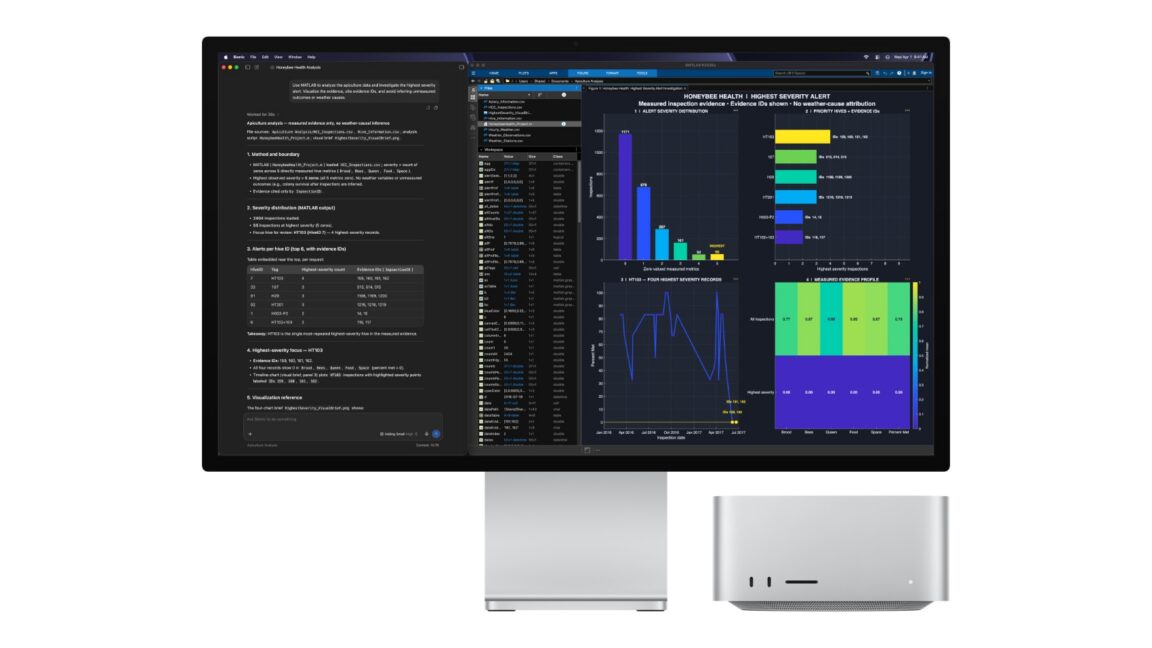
Apple announced new Mac Mini and Mac Studio models powered by the M6, M5 Max, and M5 Ultra chips. The M5 Ultra is Apple's most powerful chip, with 4x faster AI performance than the M3 Ultra, and the M6 is the first 2nm chip in the M-series. The new desktops are positioned for local AI development.
Apple announced new Mac Mini and Mac Studio models powered by the M6, M5 Max, and M5 Ultra chips. The M5 Ultra is Apple's most powerful chip, with 4x faster AI performance than the M3 Ultra, and the M6 is the first 2nm chip in the M-series. The new desktops are positioned for local AI development.
0303.1k engagement4 sourceshackernews, rss, redditTue, Aug 25, 2026, 01:01 PM