Releases·Hardware Release
Amazon's Bee launches two new personal AI devices, starting at $75
Bee, owned by Amazon, launched its first new AI devices since the acquisition: an updated wearable and a credit-card-sized recorder that attaches to smartphones. Both summarize conversations, create to-do lists, and integrate with Alexa and Amazon shopping. Pricing starts at $74.99.
0 engagement1 sourceThu, Oct 15, 2026, 12:00 PM
AI Overview
- Bee, owned by Amazon, launched an updated wearable and a credit-card-sized recorder that attaches to smartphones — its first new devices since acquisition
- The devices summarize conversations, create to-do lists, and integrate with Alexa and Amazon shopping, with prices starting at $74.99
Related
Products·launched
Amazon Bee Frontier and Eclipse: always-listening AI wearables with shopping features
Amazon is launching two updates of the Bee AI wearable it acquired: the $74.99 Bee Frontier wristband and the $99.99 Bee Eclipse, a card-shaped device that magnetically attaches to a phone. Both devices listen continuously and use AI to summarize conversations, and the new lineup adds shopping assistance. A subscription accompanies the devices.
Amazon is launching two updates of the Bee AI wearable it acquired: the $74.99 Bee Frontier wristband and the $99.99 Bee Eclipse, a card-shaped device that magnetically attaches to a phone. Both devices listen continuously and use AI to summarize conversations, and the new lineup adds shopping assistance. A subscription accompanies the devices.
0 engagement1 sourcerssThu, Oct 15, 2026, 12:00 PM
News·Company News
Bee CEO details privacy guarantees after Amazon acquisition
Steve Korshakov, CEO of Bee (acquired by Amazon eight months ago), explains that the wearable captures ~10M tokens per year and knows everything about a user within a week. He emphasizes that encryption keys never leave the user's phone, ensuring even Amazon cannot read the data.
Steve Korshakov, CEO of Bee (acquired by Amazon eight months ago), explains that the wearable captures ~10M tokens per year and knows everything about a user within a week. He emphasizes that encryption keys never leave the user's phone, ensuring even Amazon cannot read the data.
5 engagement1 sourceyoutubeMon, Jul 20, 2026, 05:17 PM
News·Company News
Amazon's Panos Panay says ambient AI devices, not apps, are the future of personal computing
Amazon SVP of Devices, Alexa & Leo Panos Panay argued at TechCrunch Disrupt that ambient AI devices will reduce reliance on apps, sensing user needs in the background. His remarks accompanied Thursday's launch of new Bee wearables that passively record and process audio to surface to-dos and reminders. For practitioners, the talk signals Amazon's strategic direction for personal AI hardware and its privacy-first architecture for always-listening devices.
Amazon SVP of Devices, Alexa & Leo Panos Panay argued at TechCrunch Disrupt that ambient AI devices will reduce reliance on apps, sensing user needs in the background. His remarks accompanied Thursday's launch of new Bee wearables that passively record and process audio to surface to-dos and reminders. For practitioners, the talk signals Amazon's strategic direction for personal AI hardware and its privacy-first architecture for always-listening devices.
0 engagement1 sourcerssThu, Oct 15, 2026, 07:55 PM
Releases·Hardware Release
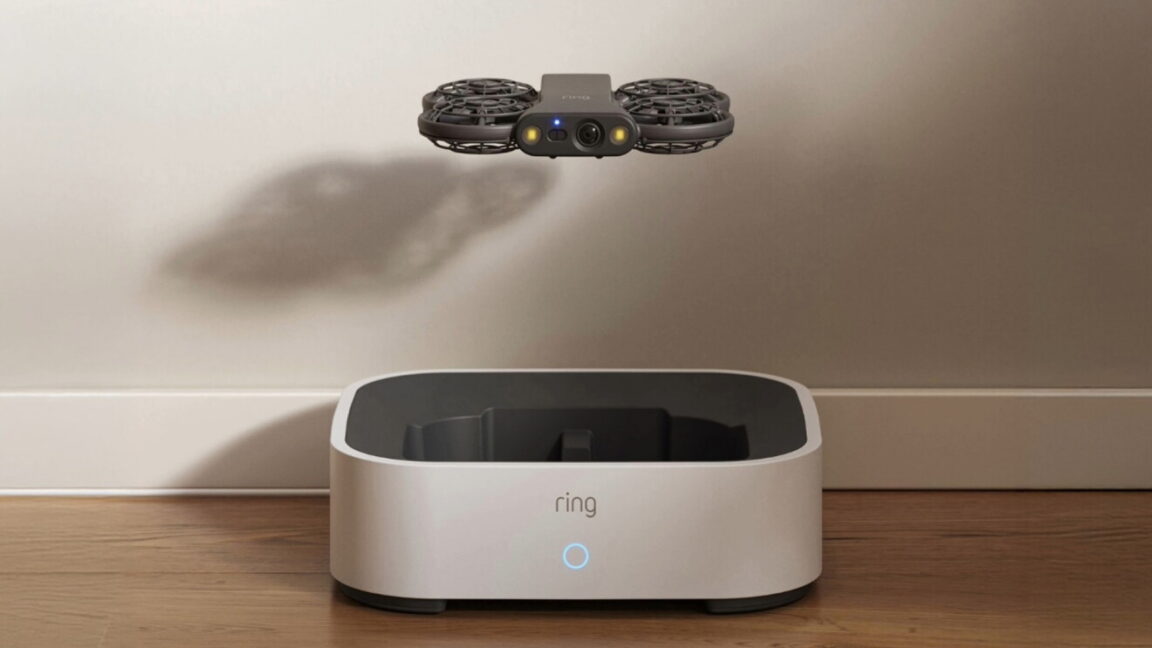
Ring cameras go mobile as Amazon debuts AI-powered security drone and robot
Amazon announced two Ring security robots: the Ring Rover Cam and Ring Drone Cam, expected to reach customers starting at the end of 2026 and early 2027 respectively. Both run an AI Pilot system combining onboard cameras, specialized vision models, sensors, and cloud processing to autonomously patrol and navigate around obstacles. The products are likely to reignite privacy concerns raised during Amazon's earlier flying-camera efforts.
Amazon announced two Ring security robots: the Ring Rover Cam and Ring Drone Cam, expected to reach customers starting at the end of 2026 and early 2027 respectively. Both run an AI Pilot system combining onboard cameras, specialized vision models, sensors, and cloud processing to autonomously patrol and navigate around obstacles. The products are likely to reignite privacy concerns raised during Amazon's earlier flying-camera efforts.
0 engagement1 sourcerssTue, Nov 10, 2026, 10:35 PM
Releases·Hardware Release
Plaud launches first AI earbuds, the One Explorer Edition
Plaud, known for AI notetaking devices, has released its first AI earbuds, the Plaud One Explorer Edition. The earbuds aim to deliver hands-free AI assistance, though the company faces skepticism given past AI earbuds' underperformance.
Plaud, known for AI notetaking devices, has released its first AI earbuds, the Plaud One Explorer Edition. The earbuds aim to deliver hands-free AI assistance, though the company faces skepticism given past AI earbuds' underperformance.
0 engagement1 sourcerssThu, Aug 27, 2026, 01:00 PM